The Bitcoin Halving Explained (And Why It Matters for the Price)
Every four years, Bitcoin's new supply gets cut in half. Here's why that single event has shaped every cycle.
Roughly every four years (every 210,000 blocks), the reward miners receive for processing Bitcoin transactions gets cut in half. This is the 'halving.' It's the entire reason Bitcoin's supply is asymptotic — capped at 21 million coins, ever.
Why it matters for price
Each halving cuts Bitcoin's annual issuance roughly in half. If demand stays even constant, supply contraction tends to push price up. Every halving so far (2012, 2016, 2020, 2024) has been followed by a multi-year price run.
Why it might matter less over time
As Bitcoin matures, the marginal supply impact of each halving shrinks (we're already past 19.5 million of the eventual 21 million coins). Future cycles may be more driven by demand shifts — like ETF flows or sovereign adoption — than by supply mechanics.
- The halving cuts new supply by 50% every ~4 years.
- Every prior halving has preceded a major run.
- Supply impact shrinks as Bitcoin matures.
Go deeper with these
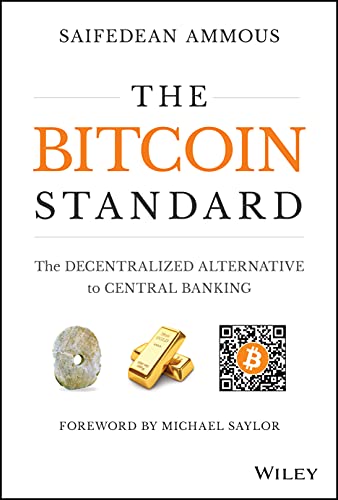
The Bitcoin Standard
The definitive book on why Bitcoin matters, told through the 5,000-year history of money.
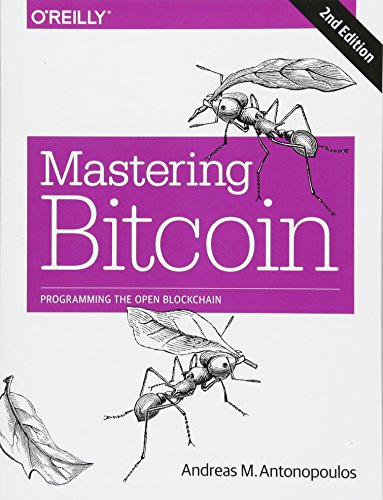
Mastering Bitcoin
The technical deep dive — how Bitcoin actually works, written for curious humans (not just engineers).
These are affiliate links. As an Amazon Associate we earn from qualifying purchases — at no extra cost to you.
More in Bitcoin & Digital Assets
How to Invest in Bitcoin Safely for Beginners
The five rules that separate beginners who do well in Bitcoin from beginners who get burned.
Is Bitcoin a Good Long-Term Investment in 2026?
Spot ETFs, sovereign adoption, and the supply math have changed the conversation. Here's the honest case for and against.
How Much Bitcoin Should I Own in My Portfolio?
From 0% to 5% to all-in maximalist — here's how to think about position sizing without copying anyone else.